Print, mail, branded materials and the campaigns around them, produced to the standard you expect and measured so you can see what each dollar added.
A campaign reaches 25,000 households at $0.75 a piece, and 198 new customers come in, each worth $360 to you in margin. The report credits all 198 to the campaign. Set the slider to the share you think were coming anyway.
Nobody knows this number without testing for it. Past the dotted line, the campaign cost more than it brought in.
Add the next when the first pays for itself. Each uses whatever fits the job: print, mail, branded materials, or the campaigns around them.
Not sure which one you need? Describe the problem and we will tell you which program fits.
The people you meet with are the people doing your work.
We have run these programs where the number had to hold up in a board meeting.
Behind every program is an account team with 30 years or more each in print, mail, and fulfillment, who run it day to day.
A mail pilot starts at 5,000 pieces.
Thirty minutes. Tell us where the problem is and we will bring back a draft test design: who we would reach, what we would say to them, and how we would measure what it did.
Book your test design sessionEight short briefs on reading the return on what you spend, written by people who have run these programs where the number had to hold up in a board meeting. Pick the one that sounds like your problem. No sign-up.
Three formulas run most mail programs. They are simple, and they work.
All three count every customer who came in after the mail went out. Some of those customers were coming anyway.
So there is a fourth formula that shows the bigger picture.
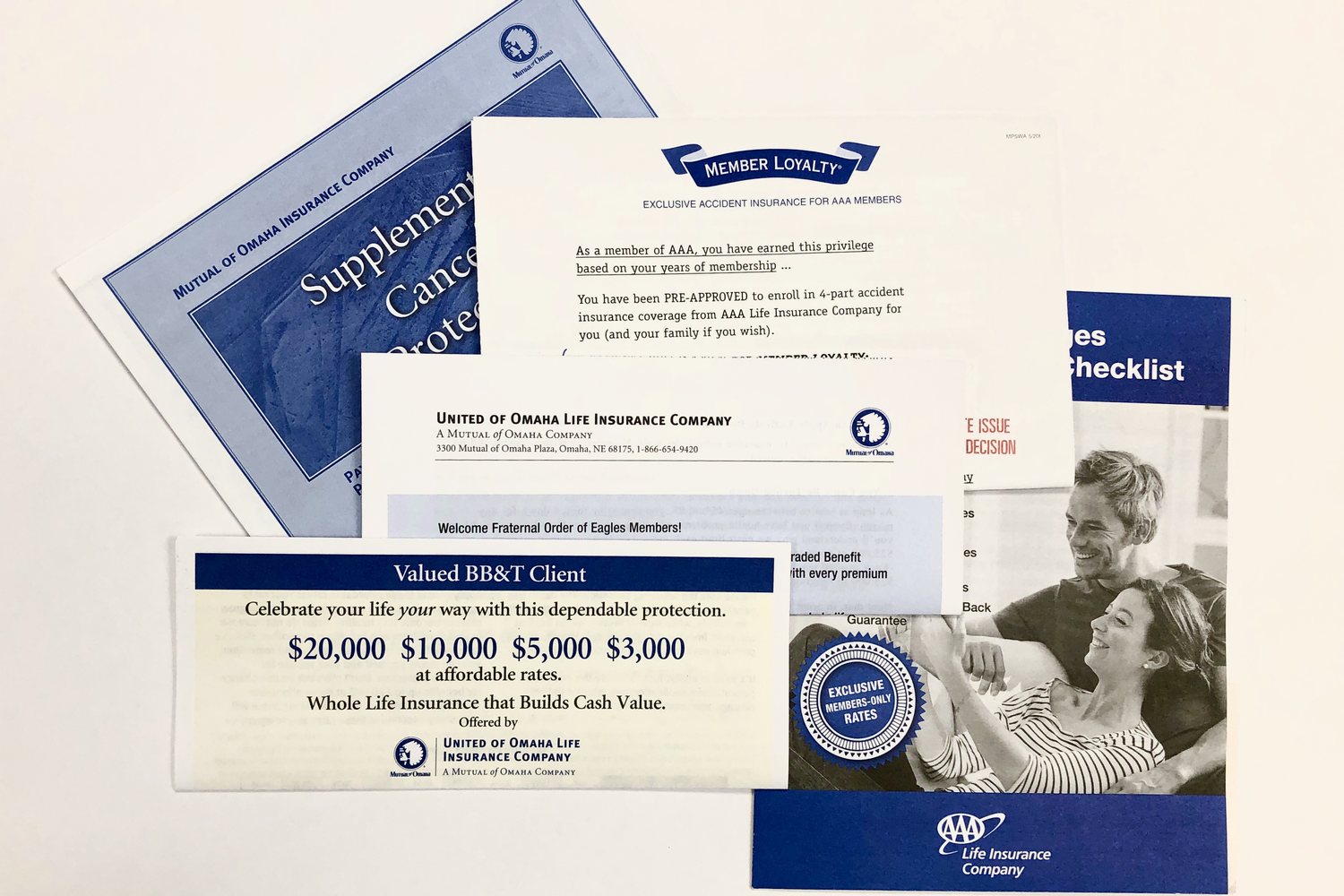
Mail 25,000 households at $0.75 a piece and count 198 new customers. The report says $95 each. If 55 of every 100 would have come anyway, the mail adds 89, and each one costs $210.
Which number is right depends on a share nobody knows without holding back a matched group and counting the difference. Until someone does, the report shows the best case.
The question to ask of any program: compared to what?
Before anyone shows you a design, settle one number: the most you can afford to pay for a sale, a saved customer, or whatever result the program is for. Everything else follows from it.
Yield is the share of households that end in the result you paid for. Response is only part of it; the rest is how many of the people who respond go on to buy.
Say you can afford $25 for each sale. A piece that costs $0.53 in the mail has to turn a little over 2 of every 100 households into a sale. A piece that costs $1.58 has to turn more than 6. Same goal, three times the sales.
And if half the people who respond go on to buy, the expensive piece needs more than 12 of every 100 to respond.
The expensive piece is not wrong. It has to earn its place, and now you know by how much.
Ask what the piece costs in the mail before you ask what it looks like.
Mail the same households a second and a third time and you will usually win more customers. Each mailing adds fewer than the one before, so the question is what the next mailing's money does best.
Mail the same 25,000 households three times at $0.75 a piece, or $18,750 a mailing. If each customer is worth $600 to you in margin, each mailing has to add 32 customers to pay for itself. If the first adds 162, the second 97 and the third 84, they bring back $5.18, $3.10 and $2.69 for every dollar.
Every mailing pays. Each pays less than the one before, so the next $18,750 may do more somewhere else: a first mailing to new households, a different piece, or a different moment.
To find your own curve, mail four matched groups: one held back, one mailed once, one twice, one three times. Each is counted against the group that got nothing, so every number is customers the mail added.
The customer count keeps rising after the profit has stopped. Count both.
Anyone who runs your mail has one job: help you sell more, as cost-effectively as possible.
Three things to expect from a partner:
Ask any partner how the result will be measured before you ask what it costs.
A program is only as good as the direction it starts with. These are the answers a good partner needs from you on day one.
Awareness is not on the list. It is hard to count, and mail is an expensive way to buy it.
If you cannot answer the last question, start there.
Every format has a cost in the mail, and that cost sets the result it has to earn. Start there.
These are starting points. The way to settle it for your audience is to mail two formats to matched groups and count the difference.
Work out what each format has to return, then let the test pick.
Most marketing reports are built on attribution, which decides what tactic gets the credit for a sale. Lift, sometimes called incrementality, asks a different question: how much business would not have happened without the spend?
Lift is counted three ways, and different people will care most about different ones: the net new customers, the revenue they bring, and the margin left after the cost of serving them. Subtract what the campaign cost and you have what it earned.
Say a campaign reaches 25,000 households at $0.75 a piece, and 198 new customers come in, each worth $600 a year in revenue and $360 in margin. The matched group you held back shows 109 of them were coming anyway, so the campaign added 89.
| What attribution credits | What the campaign added | |
|---|---|---|
| New customers | 198 | 89 |
| Revenue ($600 each) | $118,800 | $53,400 |
| Margin ($360 each) | $71,280 | $32,040 |
| After the $18,750 campaign | $52,530 | about $13,300 |
Both columns say the campaign paid. Only one tells you by how much, and so whether the next $18,750 belongs here.
A lot of money goes into getting credit right, and the reason is simple. A channel that can show it touched a sale can charge more for the next one. That is a fair thing for a seller to want. It is a different thing from what you need to know.
Your customers never buy by the rules of a credit model. They see a postcard, hear from a friend, search, and buy when they are ready. When every tactic along the way reports its own credit, the total can be larger than the sales you actually made.
Credit tells you who touched the sale. Lift tells you whether to spend the next dollar.
Costs show up in different places across an order: the quote, the stock nobody uses, the freight, the closet space, the time someone spends counting boxes. Only the first one lands in the budget for the order.
Say ten locations each order 100 shirts at $8 so they have enough on hand. The quote says $8,000. Together they hand out 600, so each shirt that was used cost $13.33, before freight, space, and staff time.
Put the same shirts in one shared supply instead, ordered through a company store and shipped when a location asks. Buy 600 in two rounds at $11 a shirt, with storage and shipping in that price, and each shirt used costs $11.00. Nothing is added later, and the closets stay empty.
Price the item that gets used, not the item on the quote.
Thirty minutes. Tell us where the problem is and we will bring back a draft test design: who we would reach, what we would say to them, and how we would measure what it did.
{{lede}}
Example figures. Change any number to make it yours.
{{q}}
{{beNote}}
Nobody knows this without testing it. Drag the slider and watch what happens below.
{{headA}} {{headB}}
{{a1}}
{{a2}}
{{a3}}
{{a4}}
Whether another mailing clears that bar is something a test answers. Past a certain point, more mail still adds results but stops adding profit. Before that point, each extra mailing usually adds less than the one before, so the next dollar may do more on new households, a different piece, or a different moment.
{{nextText}}
Thirty minutes. Tell us where the problem is and we will bring back a draft test design: who we would reach, what we would say to them, and how we would measure what it did.
{{boss}}
Thirteen trends, from the color of the year to made in the USA, with the branded products that bring each one to life. Turn the pages here, or download the PDF to share with your team.
We source it, brand it, and ship it, from one welcome kit to a company store for every location, with storage and shipping in one price per item. When it is part of a campaign, we measure what it added.
See the eight programsThirty minutes. Tell us where the problem is and we will bring back a draft test design: who we would reach, what we would say to them, and how we would measure what it did.